Core Technology for Eco-friendly Marine Equipment
The heart of core technology for eco-friendly marine equipment needs to be using composite technology in consideration of environmental friendliness, recyclability, functionality, and economy to select environmentally friendly materials, recyclable materials, and materials that can provide excellent functionality in a harsh marine environment.HS TECH is developing superior products on the basis of our accumulated technical abilities and provides only certified products in the interest of improving the marine environment.
Business Areas
-
Eco Friendly Certified Buoys
Certified buoys that meet governmental eco friendly buoy supply policies and the needs of fishermen at aquafarms
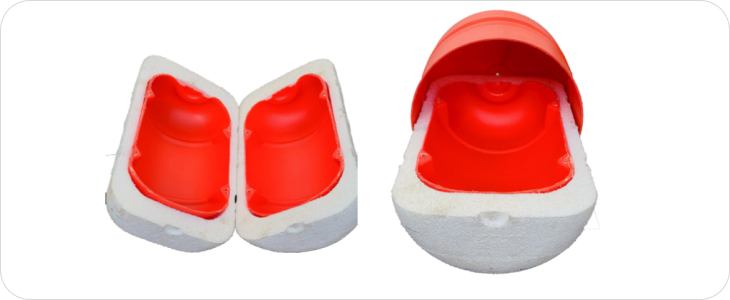
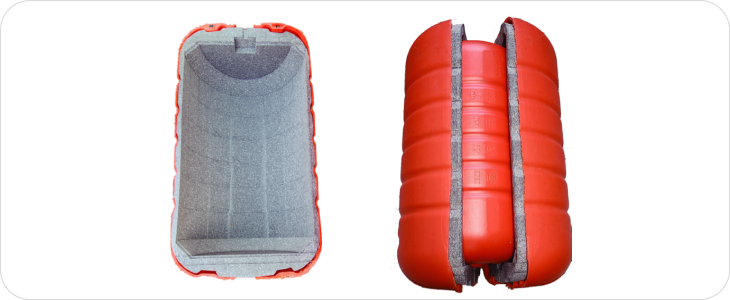
Constructed with core layer air inflation + EPP layer + exterior skin for excellent buoyancy and superior durability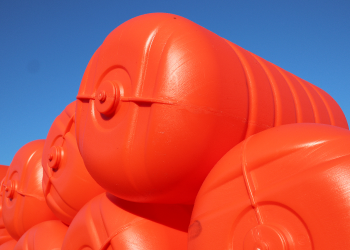

-
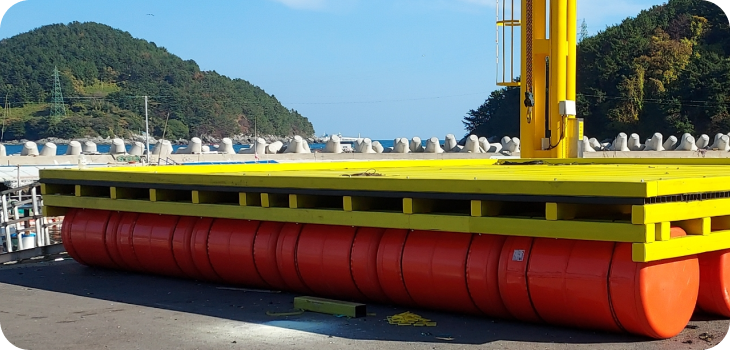
Floating Marine Structures
We use polyethylene to make marine equipment that uses environmentally-friendly materials, like high-strength square supports made from AL materials, polyethylene footholds, and anti-slip edge mats.
They not only have excellent seaworthiness, durability, and safety, but are also easy to install and maintain.
Certified Buoy Production Technology
Buoy
Buoys are floating objects that are left on the surface of the water as markers for sea routes or the location of fishing equipment. They are used for the cultivation of kelp and hanging shellfish (oysters and mussels), ascidians (sea squirt and warty sea squirt), and for inclosing net cultivation. They are used as floats for fisheries and marine facilities like landing floats, barges, floating dome houses, and rafts.
Certified Buoys
Certified buoys are buoys which have met the Ministry of Maritime Affairs and Fisheries’ certified buoy standards for quality and performance and are registered with a certifying institution for use as a replacement for exploded polystyrene buoys for use in aquafarming institutions, fisheries, and with fishing craft and fishing equipment.
-
Buoyancy
They must have guaranteed buoyancy and long-term maintenance of buoyancy

-
Durability
They must be durable in a marine environment, including against waves, physical shock, and differences in water temperature

-
Weight
They must be light and easy to install and maintain
-
Economy
They must be inexpensive and have a long life cycle to avoid frequent replacement

-
Environmentally Friendly
They must be made from materials that meet harmful chemical and quality standards

-
Recyclability
They must be made from a single material for convenient collection and recyclability


Types of Certified Buoys
| Type | PFB Certified Buoy | AFB Certified Buoy |
|---|---|---|
| Material Type | PE | PE, EPE or EPP |
| Forming Method | Blowing, rotation, vacuum | Blowing, rotation, vacuum, explosion |
| Cell Construction | PE 5mm thickness | PE inner skin 5mm + PE outer skin 5mm EPP 50mm thickness |
| Buoy Characteristics | Hollow drum type | Inner air layer, charged with exploded foam |
| Main Use | Hanging oyster, mussel, and sea squirt fisheries | Landing platforms, rafts, barges, inclosing nets |
PFB-type and AFB-type Certified Buoys
PFB certified buoy
A drum-type flotation device with an interior air layer formed from PE materials using blow forming
| Product Name | Dimensions(mm) | Weight(Kg) | Volume (ℓ) | Use |
|---|---|---|---|---|
| PFB- 70A | 600x394 | 3.1 | 73 | Kelp cultivation Hanging shellfish Ascidian fisheries |
| PFB-100A | 717x424 | 4.5 | 129 | |
| PFB-70AR | 700x388 | 3.6 | 75 | |
| PFB-100AR | 822x433 | 4.8 | 125 |

AFB Certified Buoy Characteristics
-

Environmentally Friendly
- Has passed environmental toxicity tests for certified buoy performance standards: Ministry of Maritime Affairs and Fisheries Certified Buoy Registration
- Does not produce microplastics, and eliminates root cause of environmental pollution with semi-permanent installation
-
Buoyancy and Durability
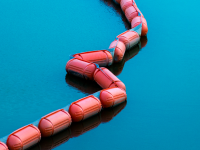
- Buoyancy is ensured with the inner core layer, and the threelayer construction including EPP layer and outer skin maintains superior buoyancy
- The EPP foam acts as a bufef r layer protecting the inner skin, absorbing shocks from the outer skin and increasing durability
-

Recyclable
- Inner and outer skin and foam are made from PE and EPP materials, making it convenient for categorized recycling
- Can be used semi-permanently to reduce use of other materials and repeated use, and frequency of recycling
- The EPP layer does not produce soot during incineration and is a convenient material for recycling
-
Economical and functional
- The three-layer construction has superior durability against shock, friction, and temperature changes and chemical resistance
- The EPP layer offers superior elasticity, making it an exceptionally effective shock absorber for its weight
- Has exceptional strength, flexibility, and elasticity, allowing it to protect the surface even with changes to the marine environment
AFB Certified Buoy
Three-layer construction with PE outer and inner skin with EPE/EPP, etc., making it a flotation device with excellent buoyancy and durability
| Product Name | Dimensions(mm) | Weight(Kg) | Volume(ℓ) | Use |
|---|---|---|---|---|
| AFB-70AR | 700 × ∅388 | 3.6 | 75 | Kelp cultivation Hanging shellfish ascidian fisheries |
| AFB-100AR | 822 × ∅433 | 4.8 | 129 |
| Product Name | Dimensions(mm) | Weight(Kg) | Volume(ℓ) | Use |
|---|---|---|---|---|
| AFB-200 | 954 × ∅548 | 16 | 224 | Landing platforms, rafts barges, and fish cages |
| AFB-300 | 1161 × ∅608 | 24 | 337 | |
| AFB-400 | 1170 × ∅682 | 28 | 427 | |
| AFB-600 | 1305 × ∅802 | 39 | 658 | |
| AFB-800 | 1400 × ∅900 | 50 | 890 |
| Product Name | Dimensions(mm) | Weight(Kg) | Volume(ℓ) | Use |
|---|---|---|---|---|
| AFB-1000 | 1460 × ∅910 | 57 | 950 | Heavy cargo barges working barges fishery barges trash collection facilities |
| AFB-1400 | 1630 × ∅1080 | 65 | 1492 | |
| AFB-1800 | 1715 × ∅1165 | 72 | 1822 | |
| AFB-2200 | 1800 × ∅1250 | 82 | 2207 |
Types of Marine Equipment
-
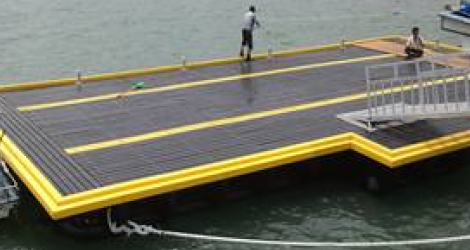
Landing Decks
A square structure which floats on top of the water and is used for ship mooring for boat mooring facilities, fishery management vessels, fishery guidance boats, and boat work facilities, etc.
-
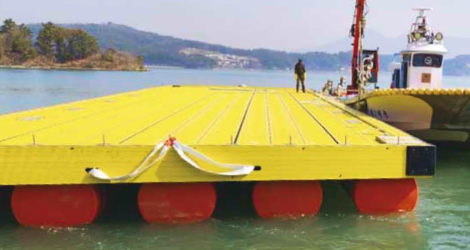
Barges
These are broad, flat floating structures made to be used on lakes and in marine environments, and are used for management facilities, fishery work, storage of discarded fishing equipment, trash collection, etc.
-
Fish Cages
These are facilities used for fish cultivation in which a fence is built in the water and a net is hung across it. They are used for inclosed net aquafarms, abalone aquafarms, scallop aquafarms, spawning grounds, etc.
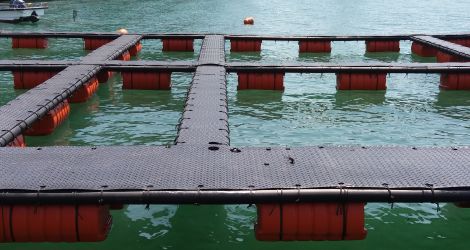
Floating Fish Cage Footholds (PE)
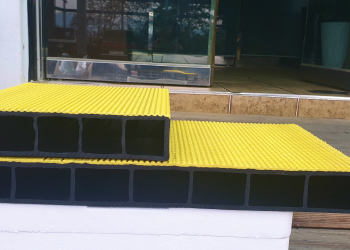
This pad for use with fish cages is an environmentally friendly product that offers not only toughness but also superior durability against abrasion and anti-slip functionality.
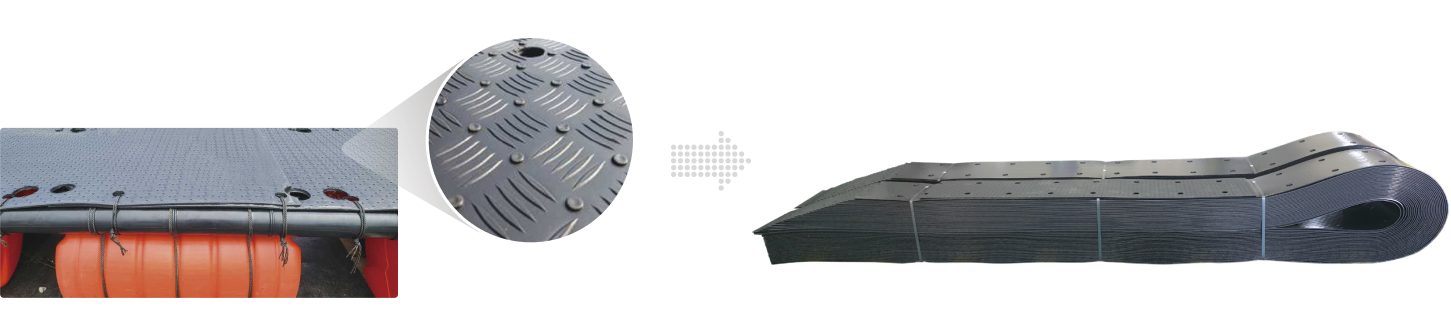
Four-Sided Foothold (PE)
For use as an exterior pad for landing pads and barges, this product is non-slip and offers excellent durability and resistance against shock and abrasion
- Dimensions 60mmx280/550mmX10m
- Color Yellow / Black Two Tone
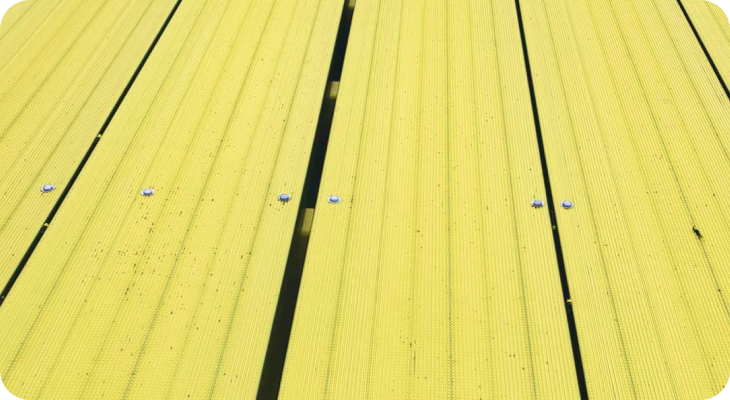
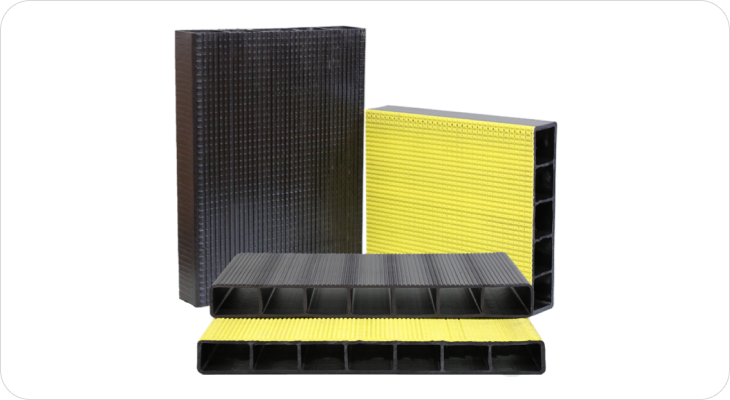
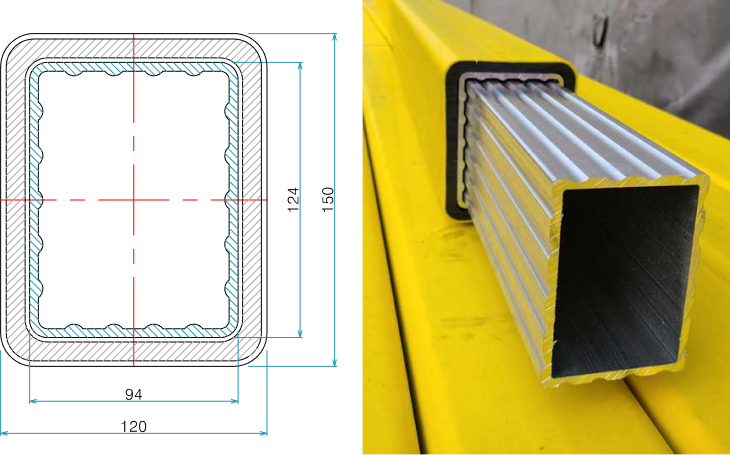
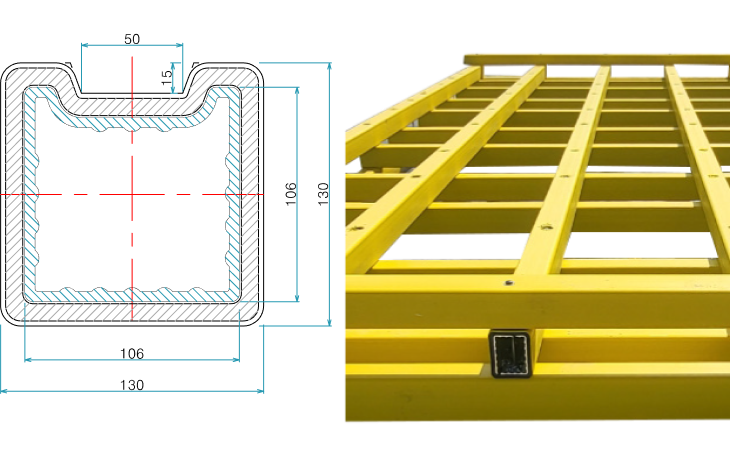
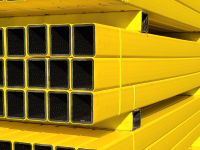
Four-sided Support (PE, PE+AL)
This four-sided support is used as a four-sided pipe to connect the landing pad upper deck, horizontal and vertical supports, and buoys, and depending on application, PE four-sided pipe or AI-reinforced PE four-sided pipe can be chosen. To strengthen the support, AL special steel is inserted into the PE material, making it appropriate for use with heavy cargo barges.
| Product Name | Type | Dimensions (mm) | Thickness(mm) | Use |
|---|---|---|---|---|
| PE support | Basic type | 120 X 150 | 8 ~ 12t | Landing platforms Small rafts and Small barges |
| Rough type | 130 X 130 | 8 ~ 12t | ||
| AL reinforced support | Basic type | 120 X 90 | 4.5t | |
| Basic type | 109 X 79 | 6.5t | Heavy cargo barges refrigerated barges and Trash collection facilities |
|
| Rough type | 106 X 106 | 4.5t | ||
| Rough type | 93.5 X 78.5 | 6.5t |